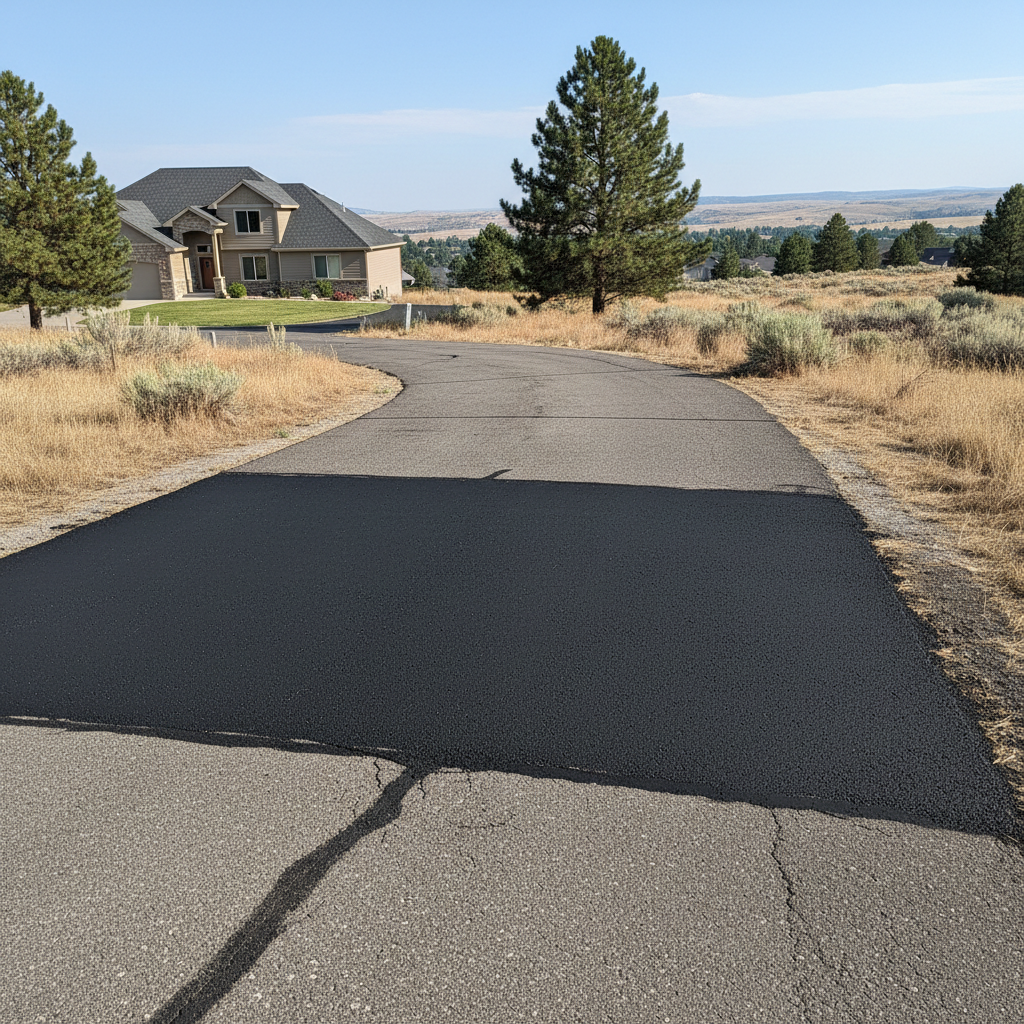
Alright, let's talk about asphalt patching. It seems simple enough, right? You've got a pothole, a crack, or just a worn-out section, and you just want it fixed. But I've seen countless homeowners around Boise — from the North End all the way to Kuna — make some pretty common, and frankly, expensive mistakes when they're planning or hiring for these jobs. You definitely don't want to be one of them. Here’s what you need to know to avoid that sinking feeling of regret.
Mistake #1: Not Really Understanding *Why* the Damage Happened
This is a big one. A lot of folks see a pothole and think, "Okay, I need that patched." And, yes, you do. But if you don't figure out why that pothole formed in the first place, you're basically just slapping a band-aid on a much bigger problem. Is it poor drainage? Is the sub-base weak? Did water get under the asphalt from a crack you ignored last year? Here in Boise, our freeze-thaw cycles are brutal on pavement, as you probably know. Water seeps into cracks, freezes, expands, and then thaws, leaving voids. If you just patch the surface without addressing that underlying water issue or sub-base problem, that patch isn't going to last. You'll be patching the same spot again next year, or worse, the damage will just spread.
Mistake #2: Going for the Cheapest Bid Without Asking the Right Questions
I get it, everyone wants a good deal. Who doesn't? But when it comes to asphalt patching, the cheapest bid often ends up being the most expensive in the long run. I've seen contractors come in with ridiculously low prices because they're cutting corners. What kind of corners? Well, they might not properly clean the area, or they could be using inferior materials, or maybe they're not preparing the sub-base correctly. They might just dump some cold patch in and call it a day. That's not a repair; that's a temporary cover-up. When you're getting quotes, don't just look at the number. Ask:
- What kind of material are you using? (Hot mix asphalt is almost always better for permanent repairs than cold patch for anything beyond a tiny, temporary fix.)
- How will you prepare the area? (Proper cleaning, cutting out damaged sections, and tack coating are crucial.)
- What's your warranty on the patch?
- Can you explain why you recommend this specific patching method for my situation?
A good contractor, like us at Boise Asphalt Creations, will take the time to explain their process and the materials they use. If they can't or won't, that's a huge red flag, wouldn't you agree?
Mistake #3: Not Thinking About the Long-Term Solution
Sometimes, a patch is exactly what you need. Other times, it's a clear sign that your asphalt is nearing the end of its life, and a patch is just delaying the inevitable. I've had homeowners call me for patching an area, and when I get there, I see their entire driveway is riddled with alligator cracking. Patching a few spots might buy you a year or two, sure, but you're pouring money into a surface that really needs a full overlay or even a complete replacement. It's like putting new tires on a car with a blown engine, if you catch my drift. A good contractor will be honest with you about the overall condition of your asphalt and recommend whether patching is a viable long-term solution or if you should start thinking about bigger repairs down the road.
Mistake #4: Ignoring Proper Drainage Around the Patch
This ties right back to understanding the 'why' of the damage. If your patching area is consistently wet because of poor grading or a downspout dumping water right onto it, that patch is going to fail. Fast. Especially with our heavy spring rains and winter snowmelt here in Boise. Before any patching work begins, take a good, hard look at how water moves across your property. Are there low spots where water pools? Is your landscaping directing water towards your asphalt instead of away from it? A patch can only do so much if it's constantly submerged or undermined by water. Sometimes, a small drainage correction or adjusting a landscape bed can make your patch last years longer.
Mistake #5: Thinking All Patches Are Created Equal
There are different types of patching, and not all of them are suitable for every situation. You've got your throw-and-roll cold patch (super temporary, mostly for emergencies), skin patching (a thin layer over a surface defect), full-depth removal and replacement (best for deep potholes), and infrared patching (heating and recycling existing asphalt). A homeowner might just ask for "a patch" without realizing there are options. A reputable contractor will assess the damage and recommend the most appropriate and durable method. Don't let someone just slap a quick fix on if your situation calls for a more robust solution. You'll just end up paying twice.
Look, asphalt patching isn't rocket science, but there's definitely a right way and a wrong way to do it. By understanding the root cause of your damage, asking smart questions, and considering the long-term health of your pavement, you'll save yourself a lot of headaches and money. Don't settle for quick fixes that won't last; invest in a repair that will stand up to Boise's weather and traffic.